Choosing the best shaker interior doors from China requires more than comparing catalog photos or factory prices. The real test appears in the details: square panel joints, clean stile edges, stable cores, accurate drilling, and a finish that survives daily handling. A door may look excellent under showroom lighting, yet reveal rough sanding around the hinge mortises.
Sarah Susanka, FAIA, has said, “The key to good design is to capture the spirit of the client and the essence of the space.” That principle fits shaker interior doors well. Their simple geometry leaves little room for manufacturing mistakes. Buyers should examine construction materials, panel movement, moisture control, paint quality, packaging, and production consistency. Factory experience matters. So does practical communication. Clear drawings, approved samples, and inspection records can prevent expensive surprises.
China offers wide choices, from solid-wood doors to engineered-core models with factory-applied finishes. However, the lowest quotation is rarely the complete answer. Freight damage, replacement timing, color variation, and unclear tolerances can change the final cost. No supplier is perfect. Even experienced buyers can overlook small details.
The best supplier combines dependable craftsmanship with transparent documentation and responsive support. This guide examines those qualities closely. It also questions common assumptions about price, customization, and quality. That makes the search more realistic, and more useful for homeowners, designers, contractors, and importers.
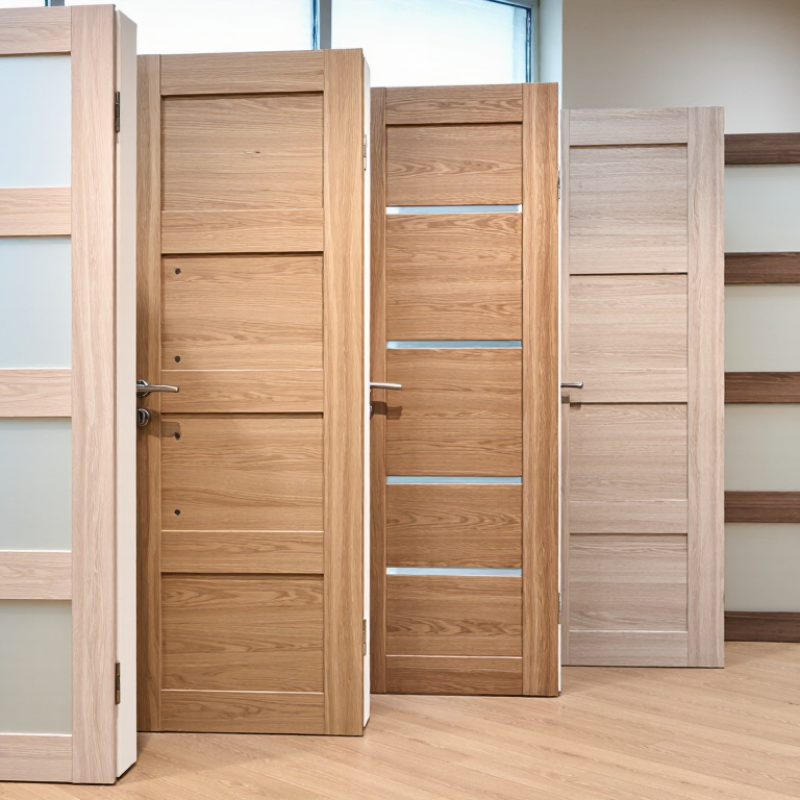
A Shaker interior door is defined by restraint, not decoration. Its classic construction uses five pieces: two vertical stiles, two horizontal rails, and one recessed center panel. The edges stay square or lightly eased. Profiles remain clean, so light creates the visual detail instead of carving.
In practical inspections, I look for even rail joints, a stable panel gap, and consistent primer coverage. These details matter more than a fashionable color. The Freedonia Group’s 2023 analysis identifies renovation activity as a major driver of interior door demand in the United States. That supports Shaker designs, which fit traditional, transitional, and modern rooms. However, the report does not measure Shaker doors directly. That limitation deserves attention.
A 2024 Grand View Research market analysis projects continued growth in the global interior doors market through 2030. China-based manufacturers often offer flexible dimensions, veneer options, and engineered-wood cores. Buyers should still verify moisture resistance, hinge reinforcement, and panel flatness. A beautiful sample can hide weak construction. Ask for section drawings and finish specifications. Also inspect a complete door, not only a corner sample. The best Shaker door has quiet proportions, dependable movement, and joints that remain tight after installation. Sometimes, less detail exposes more mistakes.

China offers several shaker door materials, from solid timber to engineered cores. The best choice depends on humidity, finish, and expected service life.
The FAO Global Forest Products Facts and Figures 2022 identifies China as the world’s largest wood-based panel producer, with annual output exceeding 300 million cubic metres. This supply supports stable production of MDF, HDF, particleboard, and laminated panels. MDF creates sharp shaker profiles and smooth painted faces. HDF provides higher density and better edge resistance. Particleboard costs less, but its screw-holding strength can vary. Solid timber gives visible grain and repairability, yet it may expand across seasonal humidity changes.
Construction matters as much as the core. Many Chinese manufacturers use stile-and-rail frames with a recessed center panel. The panel may be MDF, plywood, veneer, or a lightweight honeycomb insert. Plywood improves dimensional stability, while honeycomb construction reduces weight. That sounds ideal, but weak edge blocking can affect hinges and handles. I would request section drawings, core density, and moisture testing, not only product photographs.
For indoor safety, China’s GB/T 39600-2021 standard classifies formaldehyde emissions, including E1 at no more than 0.124 mg/m³ under its test method. Ask for recent laboratory reports and production-batch traceability. The China National Forest Products Industry Association’s industry guidance also emphasizes moisture control during storage and installation. A carefully sealed MDF door can outperform poorly seasoned solid wood. Small details decide the result.
A reliable Chinese Shaker door manufacturer should provide more than attractive catalog photos. Request a physical sample with the same core, veneer, paint, and construction planned for production. Check the rail and stile joints closely. Tight seams matter. Measure the door thickness, panel depth, and squareness with simple tools. Small differences can create installation problems later.
Ask how the factory controls timber moisture before machining. Excess moisture may cause swelling, twisting, or open joints after shipment. Review written inspection procedures for sanding, primer coverage, color consistency, and hardware drilling. Independent test reports can support claims about emissions, durability, and fire performance. Still, read the test scope carefully. One certificate may not cover every door configuration.
Factory communication also deserves careful testing. Send detailed drawings and see whether the technical team identifies unclear dimensions. Request production photos, packaging details, batch records, and a realistic lead time. A video tour is useful, but it cannot replace independent verification or a pre-shipment inspection. Contact recent commercial customers when possible. Their feedback may reveal missed deadlines or inconsistent finishing. Price alone is a weak comparison. A lower quotation may hide thinner materials, limited quality checks, or expensive rework. I have seen evaluations focus too heavily on showroom samples. That is an easy mistake. The real question is whether the same standard survives repeated production, careful packing, and long-distance handling.
This buyer-focused evaluation model assigns a practical 100-point weighting to the factors that most affect shaker interior door performance. Prioritize core stability, finish quality, and dimensional consistency, then verify moisture control, certifications, factory traceability, and export packaging through samples, inspection records, and test documentation.
When selecting Shaker interior doors from China, dimensions deserve more attention than decoration. Measure the rough opening, wall thickness, and finished floor height before requesting quotations. Standard widths often include 24, 28, 30, 32, and 36 inches. Heights commonly reach 80 inches. Custom sizes may cost more and require longer production times. Confirm whether measurements describe the door slab or the complete prehung unit. This detail causes avoidable errors. For bathrooms, laundry rooms, and compact bedrooms, a 28- or 30-inch door can improve circulation. Wider openings feel better for accessibility, but hinges and frames must support the extra weight.
Finish selection depends on the core material and room conditions. Painted MDF gives shaker panels a smooth, consistent appearance and reduces visible grain. Natural veneer or solid wood adds warmth, but color variation is normal. For humid areas, ask about moisture-resistant materials and edge sealing. Do not trust only digital color charts. Request a physical sample and inspect it under daylight and warm indoor lighting. White may look colder than expected. That surprised me on one project.
Hardware should match both use and door construction. Confirm hinge size, screw quality, lever style, lock bore, backset, handing, and swing direction. A magnetic latch feels clean, while a standard latch is easier to replace. For heavier doors, three hinges are usually safer than two. Ask for technical drawings, material specifications, inspection records, and protective packaging details. I would also approve one complete sample before production. It adds time, but small mistakes in panel depth or hardware alignment become expensive across a full order.
| Door Configuration | Typical Door Sizes | Recommended Thickness | Common Core Construction | Suitable Finishes | Hardware Options | Best Use | Selection Notes |
|---|---|---|---|---|---|---|---|
| Single-panel Shaker | 610–915 mm wide × 1981–2134 mm high (24–36 × 78–84 in) |
35–45 mm (1⅜–1¾ in) |
Solid wood, engineered wood, or hollow-core construction | Paint-grade white, warm white, light gray, natural veneer, or clear lacquer | Lever handle, round knob, ball-bearing hinges, magnetic latch | Bedrooms, studies, utility rooms, and modern apartments | The simplest Shaker profile; select a solid or engineered core where sound reduction is important. |
| Two-panel Shaker | 610–915 mm wide × 1981–2134 mm high (24–36 × 78–84 in) |
35–45 mm (1⅜–1¾ in) |
Engineered wood or solid timber with a recessed center panel | Spray-painted MDF, primed surface, wood veneer, or stained timber | Privacy lock, passage latch, concealed hinges, or standard butt hinges | Bedrooms, bathrooms, hallways, and traditional interiors | A balanced choice when you want a more decorative appearance without excessive detailing. |
| Three-panel Shaker | 686–915 mm wide × 1981–2134 mm high (27–36 × 78–84 in) |
35–45 mm (1⅜–1¾ in) |
Engineered timber, MDF-faced construction, or solid wood | Factory-primed, satin paint, matte paint, oak veneer, or walnut veneer | Passage lever, privacy lever, soft-close hinges, and adjustable strike plate | Living rooms, dining rooms, offices, and larger openings | The additional horizontal rails create stronger visual definition on taller doors. |
| Shaker French doors | Each leaf commonly 610–915 mm wide × 1981–2134 mm high (24–36 × 78–84 in) |
35–45 mm (1⅜–1¾ in) per leaf |
Engineered wood or solid wood with glass or recessed panels | Opaque paint, clear glass, frosted glass, reeded glass, or veneer | Ball-bearing hinges, flush bolts, magnetic catch, and passage handles | Home offices, dining rooms, kitchens, and rooms requiring borrowed light | Confirm the inactive-leaf bolt position and the required handing before production. |
| Shaker pocket door | 610–915 mm wide × 1981–2134 mm high (24–36 × 78–84 in) |
35–45 mm (1⅜–1¾ in) |
Lightweight engineered wood or hollow-core construction | Paint-grade MDF, smooth laminate, or thin wood veneer | Flush pull, edge pull, privacy pocket lock, and sliding door track | Compact bathrooms, closets, kitchens, and space-saving layouts | Use a recessed pull; projecting lever handles can interfere with the pocket cavity. |
| Shaker barn-style door | 760–1067 mm wide × 1981–2438 mm high (30–42 × 78–96 in) |
35–45 mm (1⅜–1¾ in) |
Solid wood or engineered wood with reinforced mounting zones | Stained oak, distressed paint, matte black paint, or natural timber finish | Top-mounted sliding track, floor guide, edge pull, and anti-jump blocks | Pantries, closets, studies, and decorative room dividers | The wall and header must support the track load; the door does not provide the same privacy as a hinged door. |
| Moisture-resistant Shaker door | 610–915 mm wide × 1981–2134 mm high (24–36 × 78–84 in) |
35–45 mm (1⅜–1¾ in) |
Moisture-resistant MDF or engineered wood with sealed edges | Polyurethane paint, PVC film, acrylic coating, or sealed veneer | Stainless-steel hinges, privacy lock, corrosion-resistant latch, and sealed strike | Bathrooms, laundry rooms, and humid interior environments | Seal all cut edges and avoid direct water exposure; moisture-resistant does not mean waterproof. |
| Fire-rated Shaker door | Commonly 610–915 mm wide × 1981–2134 mm high (24–36 × 78–84 in) |
45–54 mm (1¾–2⅛ in), subject to certification |
Certified mineral, composite, or solid-core construction | Certified paint, laminate, or veneer system compatible with the door rating | Certified hinges, closer, latch, intumescent seals, and approved fire-rated hardware | Required fire separations, corridors, and protected utility areas | The complete door assembly must be tested or certified; ordinary interior hardware should not be substituted. |
| Double-action Shaker door | 610–915 mm wide per leaf × 1981–2134 mm high (24–36 × 78–84 in) |
35–45 mm (1⅜–1¾ in) |
Engineered wood or solid wood with reinforced hinge areas | Durable painted finish, laminate, or clear-coated veneer | Double-action spring hinges, push plates, magnetic catch, and finger guards | Kitchens, service areas, and busy interior passageways | Allow clearance for the swing in both directions and verify the hinge capacity for the finished door weight. |
| Acoustic Shaker door | 610–915 mm wide × 1981–2134 mm high (24–36 × 78–84 in) |
45–54 mm (1¾–2⅛ in) |
Solid or composite core with perimeter seals and an automatic drop seal | Paint, laminate, or veneer with sealed edges | Compression latch, acoustic seals, adjustable hinges, and automatic door bottom | Bedrooms, meeting rooms, media rooms, and home offices | Sound performance depends on the entire assembly, including the frame, seals, threshold, and installation quality. |
Choosing the best shaker interior doors from China requires more than comparing catalog photos. Check the core first: stable stiles, square rails, tight joints, and a smooth, consistent finish. Ask for moisture readings before packing. For engineered wood, confirm formaldehyde testing and the applicable destination standard. EN 14351-2 may apply in European projects, while ASTM testing can support North American specifications. A certificate alone is not enough. Request the full laboratory report, test sample size, and production date.
Pricing should include hardware, packaging, inspection, duties, and inland delivery. A low quotation can become expensive after crating or replacement costs. The World Bank’s 2023 Logistics Performance Index gave China an overall score of 3.7 out of 5, showing strong logistics, but not guaranteed delivery for every factory. UNCTAD’s Review of Maritime Transport 2023 also highlighted continuing freight-rate volatility. Confirm lead time in writing, with milestones for approved samples, production, inspection, and shipment. I once underestimated packaging. The doors arrived safely, but the volume increased freight costs.
Tips: Compare one identical specification across three suppliers. Check a full-size sample, not only a small corner. Measure stile width, panel thickness, edge sealing, and warp after conditioning. Review quality records and factory photos. If the supplier avoids independent inspection, reconsider. Beautiful paint can hide weak joints.