10 Best Home Doors for Every Style and Budget

Choosing the right home doors means balancing appearance, privacy, durability, and cost. A painted entry door can brighten a plain facade, while a solid-core interior door helps soften hallway noise. The best choice depends on where the door goes and how your household uses it. Looks matter. So do hinges, seals, and a frame that fits properly.

This guide explores ten home doors for different styles and budgets, from classic wood designs to practical fiberglass and sliding options. We consider material, maintenance, insulation, privacy, and the kind of rooms each door may suit. A lower price can be appealing, but it may come with simpler hardware or a finish that needs more care. That trade-off is worth checking. Even an attractive door can disappoint if it sticks in humid weather or leaves a chilly gap beneath the sill.

Before choosing, measure the opening and check the manufacturer’s installation requirements. Climate, exposure to rain, household noise, and existing frames can all affect performance. Product features also vary, so compare specifications rather than relying on appearance alone. Some choices will fit your home better than others, and no single style works everywhere. Use these ideas as a starting point, then weigh the details against your space, budget, and plans for upkeep.
10 Best Home Doors for Every Style and Budget

Key Features That Shape a Home Door’s Performance

A home door performs well when its frame, core, seals, and hardware work together. A solid-looking slab can still leak air if the threshold sits unevenly. Check for daylight around the edges, then feel for drafts on a windy day. Small gaps matter.

The U.S. Department of Energy’s Energy Saver guidance says air leakage can account for 5–30% of a home’s energy use.

That range covers the whole home, not doors alone, but it shows why careful installation and weatherstripping deserve attention. A tighter door can also make an entryway feel less chilly.

Compare measured ratings, not just material labels. The National Fenestration Rating Council’s certified product data reports U-factor and solar heat gain coefficient, or SHGC. Lower U-factor generally means less heat transfer; SHGC indicates how much solar heat enters through a glazed door.

These values help compare products, though climate and exposure matter. A sunny south-facing entry may benefit from different glazing than a shaded, wind-exposed porch.

Feel the draft. Check the sweep, hinges, and latch, too. A door that rubs or fails to close cleanly may waste energy despite a strong core. In practice, ratings can be easy to overread; installation quality is less tidy to compare, but just as important.
Common Door Materials, Designs, and Opening Styles

Door materials affect comfort, upkeep, and price. Solid wood offers natural grain and can be refinished, but it may swell with humidity. Fiberglass resists moisture and needs little maintenance. Steel is often a practical, lower-cost choice, though dents can be difficult to repair. Glass panels bring daylight into an entry, but consider privacy and insulation before choosing large panes.

Design and opening style matter just as much. A classic paneled door suits many interiors, while a flush door creates a quieter, modern look. Most entry doors swing inward or outward, so check the landing area and nearby furniture. Sliding and pocket doors save floor space, but pocket doors need clear wall space and careful installation. French doors open wide and frame a view; they also require room for both panels. It is easy to focus on appearance and overlook daily traffic. Even a beautiful door can feel awkward in a narrow hallway.

Tips: Measure the opening, wall depth, and swing clearance before shopping. Check that the frame is square, too. A small measuring error can turn a simple replacement into extra work.

10 Home Door Options for Different Styles and Budgets

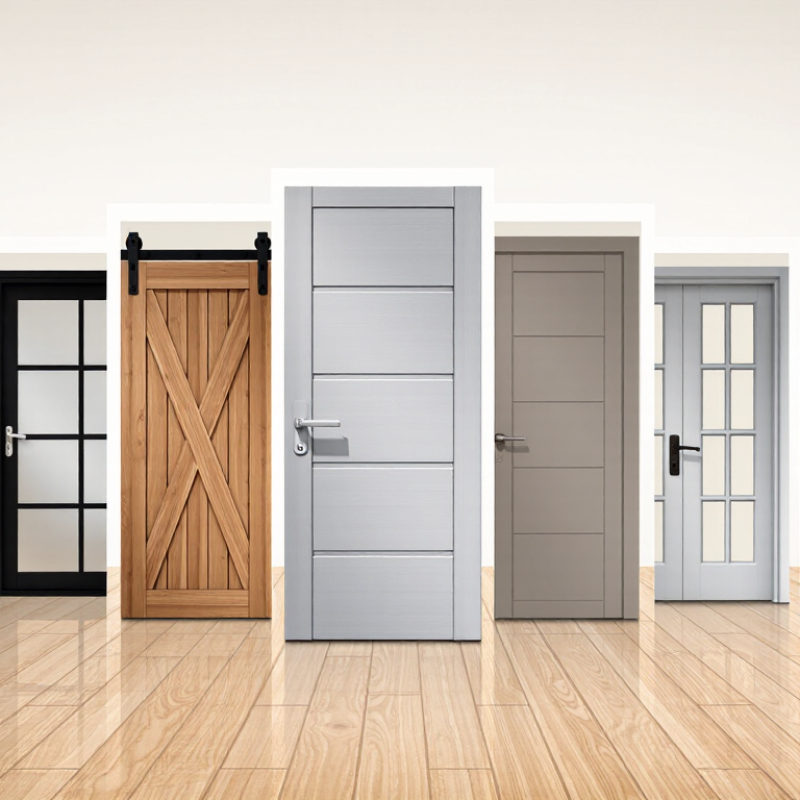
A home door should suit its room, daily use, and budget—not just its photograph. A raised-panel wood door brings warmth to traditional interiors, while a smooth flush door keeps modern rooms visually quiet. French doors with clear glass share daylight between spaces; frosted panes offer more privacy. A Dutch door opens at the top for airflow while keeping the lower half closed. Small rooms benefit.

For busy entries, steel doors often provide a sturdy, practical option, while fiberglass can mimic wood grain with less routine upkeep. Solid wood has appealing texture, but it may need more care as conditions change. A sliding barn door saves swing space and adds a rustic detail, though it may leave sound and light gaps. Pocket doors slide into the wall, making them useful where floor space is tight. Measure twice. Wall framing can limit this choice.

Louvered doors allow air to move through closets or utility areas, and screen doors bring breezes into sheltered entrances. These options solve different problems, so compare function before finish. Check the opening size, hardware clearance, and installation needs before buying. A low-cost door may still require extra work if the frame is uneven. I find that detail easy to overlook; correcting it can cost more than expected.

How to Compare Doors by Cost, Security, and Energy Efficiency

A home door should suit the way you live, not just the front of your house. Compare the full installed cost, including hardware, finishing, and any frame repairs. A basic door may look cheaper on the shelf, but an uneven opening can add labor. Not just the sticker. Ask for an itemized estimate, and check what the warranty actually covers.

Security depends on more than a heavy slab. Look at the frame, hinges, lock preparation, and how firmly the door closes. For an exterior door, a solid core or reinforced construction can offer more resistance than a lightweight hollow interior door. Check that the strike plate is securely attached to the frame. Better materials help, but careful installation matters just as much.

Energy efficiency is easy to overlook. Choose weatherstripping that seals evenly, and check the door’s insulation or performance rating where available. If daylight shows around the edges, warm air can escape in winter and hot air can enter in summer. Small gaps matter. A glass panel may brighten a dark entry, though its size and glazing affect heat transfer. I’d compare options in the actual doorway, if possible; finish samples rarely reveal drafts, closing effort, or how a threshold feels underfoot.

10 Best Home Doors for Every Style and Budget — How to Compare Doors by Cost, Security, and Energy Efficiency

Compare common exterior door options by typical installed cost, design, security features, and energy performance. Costs are approximate U.S. dollars and can vary with size, location, hardware, and installation conditions.

Door Type Style and Best For Typical Installed Cost (USD) Security Considerations Typical Whole-Unit U-Factor Energy Efficiency
Insulated Steel Entry Door Simple, versatile design; a practical choice for many front and side entrances. $500–$1,500 Strong door skin; pair with a quality deadbolt, reinforced strike plate, and secure frame. About 0.17–0.30 Usually very good when the core is insulated and weatherstripping is in good condition.
Fiberglass Entry Door Available in modern and traditional looks, including wood-grain finishes; suits varied climates. $1,000–$3,000 Durable door construction; security depends on the lock, frame, hinges, and installation. About 0.20–0.35 Often very good; insulated models can limit heat transfer and resist drafts.
Solid Wood Entry Door Classic, natural appearance for traditional, craftsman, or custom homes. $1,200–$4,000 Solid construction can be robust, but choose suitable locks and maintain the frame and finish. About 0.30–0.50 Fair to good; performance varies by wood species, thickness, fit, and weather seals.
Craftsman-Style Fiberglass Door Decorative panels and optional small upper glazing suit craftsman and cottage façades. $1,200–$3,500 Comparable to other fiberglass doors; glazing can be a more vulnerable point than an opaque panel. About 0.22–0.38 Good to very good; insulated panels perform best, while glass area affects the whole-door rating.
Entry Door with a Small Glass Lite Brings daylight into an entry while keeping most of the door panel solid. $700–$2,200 Use impact-resistant or laminated glazing where appropriate; consider a reinforced lock and frame. About 0.25–0.45 Good with insulated low-emissivity glazing; performance depends on glass and frame details.
Full-Glass Hinged Patio Door Connects indoor and outdoor spaces and provides broad views and daylight. $1,500–$4,500 Secure multipoint or high-quality locking hardware; glazed areas may need additional security measures. About 0.25–0.45 Good with double-pane low-E glass and tight weather seals; large glass areas can increase heat transfer.
Sliding Glass Patio Door Space-saving option for patios and decks where a swinging door would be inconvenient. $1,200–$4,000 Check the panel lock, track, and anti-lift protection; security varies by frame and hardware. About 0.25–0.45 Good with double-pane low-E glazing and well-sealed frames; sliding seals need regular inspection.
French Double Doors Traditional paired doors for wider entrances, dining rooms, or garden access. $2,000–$6,000 Secure the inactive leaf with flush bolts and use quality locks on the active leaf. About 0.25–0.50 Fair to good; choose insulated glazing and ensure both leaves close tightly against the seals.
Modern Flush Entry Door Clean, minimal appearance that works well with contemporary architecture. $800–$2,500 Security depends on the door material and construction; reinforce the frame and lock area. About 0.18–0.35 Good to very good when built with an insulated core and properly fitted weatherstripping.
Storm Door Secondary exterior door that adds a protective layer and can provide ventilation or a screen. $250–$900 Not a replacement for a secure primary entry door; its frame and latch offer limited additional protection. Varies by design; not directly comparable to a primary entry door Can reduce drafts and protect the main door; benefit depends on climate, fit, and how it is used.

How to compare: A lower U-factor generally means less heat transfer through the door. The ranges shown are illustrative, not guaranteed ratings; check the specific product’s certified whole-unit rating. Security descriptions are general—not standardized ratings—and depend on the complete door assembly, including its frame, locks, hinges, glazing, and installation.

Choosing the Right Door for Each Room and Entrance

Choosing the right door starts with how a room is used, not just how it looks. Measure the opening, wall thickness, and available swing space before comparing styles. A bedroom often benefits from a solid-core door, which can reduce everyday hallway noise. It is heavier, though, and may cost more than a hollow-core option. For a bathroom, choose a finish suited to moisture and leave enough clearance for ventilation. Small details matter.

At the entrance, prioritize a secure frame, a weather-resistant threshold, and a finish that can handle sun and rain. A glass panel can brighten a dim hallway, but it may reduce privacy; textured or frosted glass offers a useful compromise. For kitchens and laundry rooms, consider doors that open without blocking appliances or walkways. Pocket doors save floor space, yet repairs can be less straightforward if the track is hidden inside a wall. A modest budget can still cover a good fit and durable hardware. Before ordering, check the door’s handing and swing direction against the actual room layout. Measurements are easy to rush, and a small error can mean a costly adjustment.