Top 10 Warehouse Door Suppliers for Global Buyers

Choosing a warehouse door is not a minor purchasing detail. It affects traffic flow, temperature control, worker safety, and the time a loading bay remains usable. For global buyers, the challenge is comparing suppliers across different climates, building layouts, and service networks. A low quotation may look attractive, but installation support and replacement-part access matter too.

Warehouse-door specialist Alex Morgan captures the decision in one practical rule: “Match the door to the work cycle, not just the opening.” Buyers should check the expected opening frequency, clear dimensions, wind exposure, insulation needs, and available maintenance response. A busy distribution center may need a fast-cycle door, while a chilled facility may place greater weight on sealing and thermal performance. Small details count. A dock seal that does not fit can leave visible gaps around a trailer.

This guide reviews ten warehouse door suppliers for buyers seeking options across international markets. It considers product range, customization, technical documentation, installation coverage, and after-sales service. Supplier capabilities can vary by region, so confirm local support before treating any shortlist as final. Ask for cycle ratings and service terms in writing. Then compare them against the actual site conditions. This overview is a starting point, not a substitute for a project-specific assessment. Even experienced buyers can overlook one constraint: the building itself may limit which door system can be installed.
Top 10 Warehouse Door Suppliers for Global Buyers

What Warehouse Doors Are and How They Support Facility Operations

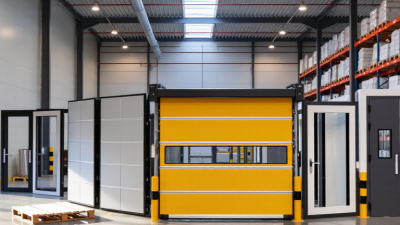
Warehouse doors are engineered openings that allow people, forklifts, and goods to move between work areas and the outdoors. Common types include sectional overhead doors, rolling steel doors, and high-speed fabric doors. Each works differently. The right choice depends on traffic, available headroom, insulation needs, and how often the opening is used.

These doors help manage daily facility operations. A well-fitted door can limit drafts, dust, rain, and temperature loss around loading bays. Faster opening cycles may reduce forklift waiting during busy shifts. Safety features, such as photoelectric sensors and soft bottom edges, can help prevent contact with people or equipment. Still, sensors need regular checks; they do not replace careful traffic planning.

A warehouse door also affects maintenance schedules and energy use. For example, a cold-storage site may need insulated panels and tight perimeter seals, while an interior partition may prioritize frequent cycling. Small details matter. Measure the opening, note nearby pipes or lights, and consider how technicians will reach the motor. A high-speed door may sound ideal, but heavy use, cleaning routines, or impact risk can change the decision. The trade-off is easy to miss during a quick site visit.

How to Assess Warehouse Door Suppliers in Global Markets

Top 10 Warehouse Door Suppliers for Global Buyers

How to Assess Warehouse Door Suppliers in Global Markets

Choosing a warehouse door supplier takes more than comparing prices. Start with the operating conditions: opening size, daily traffic, forklift speed, temperature changes, and exposure to wind or dust. A door used hundreds of times each day needs different testing evidence from one used occasionally. Ask for documented cycle-test results and clear limits on size, speed, and maintenance intervals.

Details matter.

Check how the supplier handles specification and installation across regions. Request drawings, material descriptions, safety features, and product test records for the exact door model being quoted. Ask who verifies measurements and who manages commissioning at the destination. A technically strong product can still disappoint if local technicians cannot obtain replacement panels, seals, or controls quickly.

Ask for proof.

References from facilities with similar climates and workloads are useful, but verify what the supplier actually delivered.

Compare service plans, lead times, spare-parts availability, and warranty terms in writing. Clarify response times and which costs fall outside the quoted price, including freight, installation, and training. Communication matters too: unanswered questions during bidding may signal problems after delivery. Still, a scorecard is not perfect; a polished proposal can hide weak field support. Speak directly with recent customers and ask what failed, how long repairs took, and whether the door performs as promised.

Top 10 Warehouse Door Suppliers for Global Buyers

For global buyers, a shortlist of ten warehouse door suppliers should reflect more than catalogue size. A distribution centre may need rapid-cycle doors at loading bays, insulated sectional doors for temperature control, and durable steel doors for service areas. The right supplier asks about opening frequency, wind exposure, forklift traffic, and available headroom before recommending a model. Small details matter.

Compare each supplier’s technical drawings, cycle ratings, material specifications, and installation guidance. Ask for documented test results and clear maintenance intervals, not just broad performance claims. Check whether replacement panels, motors, and safety sensors can be sourced in your region. A low purchase price may become costly if routine parts take weeks to arrive. Shipping dimensions matter, too.

Request itemised quotations from all ten candidates, including packaging, freight assumptions, commissioning, and warranty terms. Ask how the supplier handles a damaged panel or a door that fails during heavy use. Response times should be stated plainly. The paperwork can look perfect; real projects are messier. I would also verify that proposed dimensions match the site’s measured opening, since drawings and older buildings do not always agree. A useful comparison records these gaps instead of hiding them.

Warehouse Door Types: Indicative Opening Speed Ranges

High-speed fabric doors are generally designed for faster cycles than conventional sectional or rolling steel doors. These are broad planning ranges, not guaranteed specifications; actual speeds vary by product, size, and operating conditions.

Comparing Suppliers by Products, Certifications, and Service Coverage

A useful comparison of warehouse door suppliers starts with the products they actually support. Check whether each supplier offers high-speed, sectional, or rolling doors, and whether options suit your opening size, traffic, and operating conditions. A loading bay with frequent forklift movement may need different impact protection from a temperature-controlled room. Ask for clear product specifications, including cycle ratings, wind resistance, insulation values, and available controls. Product breadth matters, but a long catalog does not guarantee a good fit.

Certifications and service coverage need equal attention. Request current certificates and test documents, then confirm which product models and facilities they cover. Quality-management certification can indicate documented processes, but it does not replace product-specific performance evidence. Ask who handles installation, commissioning, spare parts, and emergency repairs in your region. Response times and technician availability matter when a damaged door blocks a busy dock. A tidy comparison table can still miss the reality of local service; that is easy to overlook.

Tips: Ask for references from projects with similar door types and usage. Confirm warranty exclusions, parts lead times, and service hours in writing. Check details twice. Some specifications may look comparable while measuring different conditions.

How to Choose and Verify a Supplier for Your Project

Choosing a warehouse door supplier starts with the project, not the catalogue. Measure each opening, note ceiling clearance, traffic volume, and exposure to wind or washdown. A loading bay used by forklifts all day needs different cycle ratings from a rarely used service entrance. Share these details before comparing quotations. Otherwise, a low price may leave out essential controls or installation work.

Ask for technical drawings, operating-cycle data, safety features, warranty terms, and a clear delivery schedule. Check test reports and certificates against the exact door model offered, then confirm their validity with the issuing organization where possible. Request references from projects with similar climates and traffic patterns. Ask how quickly spare parts can be supplied. Details matter.

A capable supplier should explain limits, not only advantages. Have an independent installer review dimensions, fixing points, and electrical requirements before ordering. Compare written quotations line by line, including freight, commissioning, and staff training. A site visit can reveal practical issues, such as a control panel placed behind a parked pallet. It is easy to miss something. Even experienced teams do. Keep decisions, revisions, and promised lead times in writing, and leave room for a final technical review before production.

Top 10 Warehouse Door Suppliers for Global Buyers - How to Choose and Verify a Supplier for Your Project

The entries below are supplier profiles, not named companies or a verified ranking. Product availability, certifications, and performance vary by supplier and market; confirm them against project requirements and current documentation.

# Supplier profile Typical warehouse-door offering Best suited to Documents and evidence to verify Key buyer check
1 Integrated industrial-door manufacturer A range that may include sectional overhead, rolling, and high-speed doors. Projects needing several door types, coordinated specifications, or multi-site procurement. Product data sheets, installation instructions, applicable conformity documents, test reports, and warranty terms. ISO 9001 certification, if claimed, relates to a quality-management system—not product performance. Confirm that each proposed door model—not just the supplier generally—meets the opening dimensions, duty cycle, and local requirements.
2 High-speed door specialist Fast-operating fabric or flexible doors, with configurations for interior or exterior openings. Busy traffic routes where opening speed, traffic flow, or separation between areas is important. Operating-cycle data, safety-device details, wind-performance information where applicable, service requirements, and replacement-part availability. Ask how performance is measured and whether the quoted duty cycle and environmental conditions match actual site use.
3 Sectional overhead-door manufacturer Insulated or non-insulated sectional doors, commonly supplied with tracks, springs, and optional operators. Loading bays and warehouse openings where overhead clearance and thermal performance matter. Panel construction and thermal data, wind-load information where relevant, hardware specifications, installation details, and operator documentation. Check headroom, side room, track arrangement, structural support, and compatibility with dock equipment.
4 Rolling steel-door manufacturer Coiling steel doors for industrial openings, with options that can include insulation, grilles, or fire-rated assemblies. Sites prioritizing compact overhead storage, security, or a specified fire-protection application. Door and operator specifications; for fire doors, the applicable assembly listing or approval and inspection, testing, and maintenance instructions. Do not treat a fire-door claim as sufficient by itself: verify the complete rated assembly and its suitability for the opening and jurisdiction.
5 Cold-storage door supplier Insulated sliding, hinged, or high-speed doors designed for chilled or frozen environments. Cold rooms, freezer areas, and temperature-controlled distribution facilities. Thermal-performance data, operating-temperature limits, seal and frame details, condensation or frost-control provisions, and maintenance instructions. Confirm the full door set is suitable for the specified temperature difference, traffic pattern, and moisture conditions.
6 Fire-door manufacturer or specialist Fire-rated personnel or industrial door assemblies, where the required configuration is available and approved for the project. Openings where a fire strategy, building code, or authority requires a rated door assembly. Current test or listing documentation for the complete assembly, permitted dimensions and hardware, installation instructions, and inspection requirements. Verify the rating, opening size, wall construction, hardware, and local acceptance with the project’s fire-safety professional or authority.
7 Dock-and-door systems integrator Warehouse doors coordinated with dock levellers, shelters or seals, vehicle restraints, and controls. Distribution centres and loading bays where equipment interfaces and site coordination are critical. Interface drawings, equipment schedules, electrical and control requirements, installation scope, commissioning records, and service-response terms. Clarify who is responsible for design coordination, power and controls, commissioning, and support across different equipment packages.
8 Cleanroom or hygienic-door supplier Smooth-surface, sealed, or cleanable door systems, with configurations determined by the facility and process. Food, pharmaceutical, laboratory, and other controlled environments with defined hygiene or pressure requirements. Surface and seal specifications, cleaning-chemical compatibility, leakage or pressure data where required, and project-specific validation documents. Match claims to the facility’s documented cleanliness, pressure, and cleaning criteria; do not assume a door alone certifies a cleanroom.
9 Regional manufacturer and installer Locally supplied industrial doors, installation, and potentially routine maintenance. Projects that benefit from local site surveys, regional code familiarity, and nearby service support. Business and installer credentials, comparable project references, insurance, product documentation, written scope, and warranty conditions. Verify the installer’s responsibility for measurements, structural interfaces, commissioning, and post-installation service.
10 Door-service and retrofit contractor Inspections, repairs, replacement components, safety upgrades, and retrofit work on existing doors. Operating facilities seeking to reduce downtime or extend the service life of installed equipment. Technician qualifications, inspection checklists, parts sourcing information, service records, response terms, and repair warranty. Request a documented condition assessment and confirm that replacement parts and modifications preserve the required safety and performance.

Standards note: EN 13241 is a European product standard covering industrial, commercial, and garage doors and gates; related safety requirements and applicable conformity rules should also be checked. In North America, confirm the standards and approvals applicable to the specific door and operator—for example, ANSI/DASMA 102 for sectional doors and UL 325 for door and gate operators where applicable. Requirements vary by product, jurisdiction, and project.