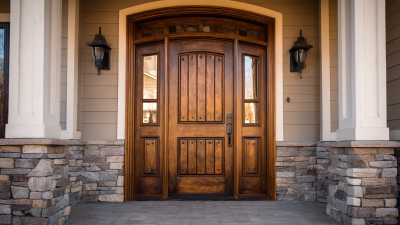
Choosing home doors from China can give global buyers broad design options, competitive pricing, and flexible production support. However, supplier selection requires more than comparing online catalogs. A reliable manufacturer should demonstrate stable factory operations, documented quality controls, and experience serving international markets.
This guide examines leading Chinese home doors manufacturers through practical buying criteria. These include material selection, moisture resistance, hardware performance, safety testing, customization, packaging, and after-sales communication. Buyers may encounter solid wood doors, engineered wood models, steel security doors, aluminum systems, and modern glass designs. Each option suits different climates, building styles, and project budgets.
Look for clear evidence. A professional supplier should provide factory photos, product specifications, inspection records, and relevant certifications. Sample orders can reveal surface consistency, hinge alignment, lock quality, and packaging strength. One damaged corner after delivery may expose weak protection inside the shipping crate. Small details matter.
No supplier is perfect. Even experienced exporters can face delays, color differences, or communication gaps. That assumption deserves review. Buyers should confirm lead times, tolerance requirements, warranty terms, and replacement procedures in writing. Independent inspections can also reduce avoidable risks before shipment.
The manufacturers discussed here are assessed for production capability, product consistency, customization support, and export reliability. Their strengths may differ significantly. One factory may excel at hotel projects, while another performs better with residential renovations or large-volume developments. Careful comparison helps buyers choose home doors that perform well beyond attractive product images.
China Top Home Doors Manufacturers for Global Buyers
Chinese manufacturers offer a broad range of home door types for international projects. These include solid wood, engineered wood, steel, aluminum, fiberglass, uPVC, sliding, folding, and fire-rated doors. According to Grand View Research, the global doors market was valued at about USD 140 billion in 2023. This demand reflects renovation, urban housing, and energy-efficiency projects.
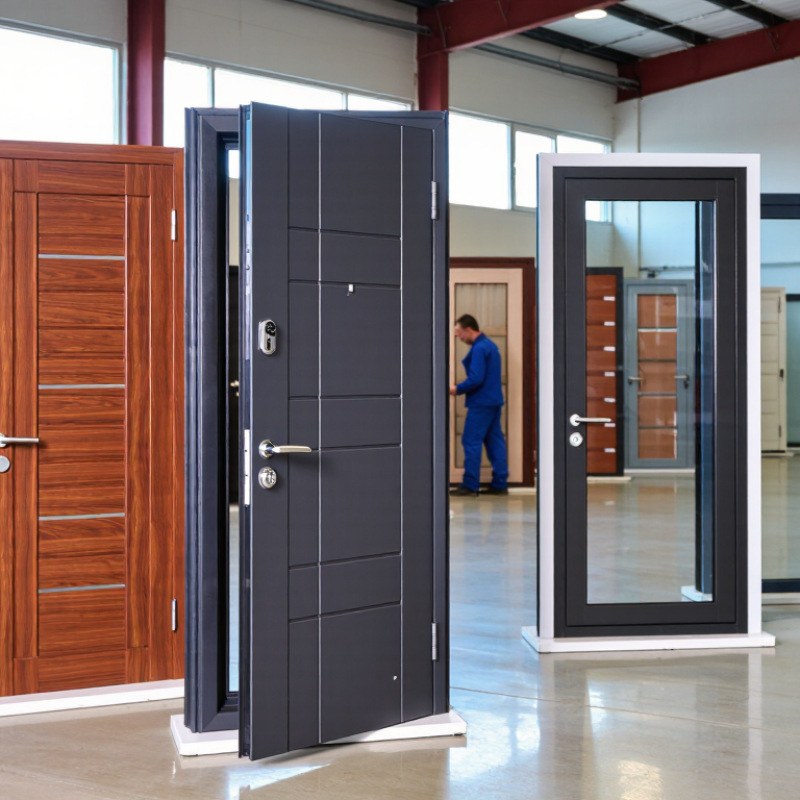
Engineered wood doors suit bedrooms and interior corridors. They can provide stable dimensions in changing humidity. Steel doors support stronger security requirements, while aluminum doors work well for balconies and modern entrances. Fiberglass doors resist moisture and can imitate wood grain. For compact apartments, sliding doors save floor space. Folding doors create wider openings between kitchens and living rooms.
Small details matter. Buyers should check core density, frame depth, hinge quality, glazing performance, and surface durability. A 2024 report from Fortune Business Insights identifies energy efficiency as a major driver in the building doors market. Therefore, insulated panels and low-emissivity glass deserve careful review. Fire-rated products also require certified test documentation for the destination market.
Not every attractive sample performs equally well. A warm showroom can hide poor sealing. I have seen specifications omit hardware grades and installation tolerances. That is a problem. Buyers should request full drawings, test reports, moisture data, and sample approval before production. Local climate and building codes still decide the best door type.
| Door Type | Typical Construction | Common Applications | Standard Features | Customization Options | Typical Advantages | Important Buyer Checks |
|---|---|---|---|---|---|---|
| Solid Wood Doors | Natural timber panels or engineered wood cores with real-wood veneer | Bedrooms, living rooms, studies, entryways | Natural grain, paint or stain finish, traditional hinged operation | Wood species, panel design, glazing, hardware, dimensions and finish | Premium appearance, good durability and effective sound reduction when properly sealed | Moisture content, warping control, timber legality and local installation requirements |
| Engineered Wood Doors | Finger-jointed wood, MDF, plywood or composite core with decorative veneer or laminate | Interior rooms, apartments, hotels and residential projects | Stable panel structure, smooth surface and repeatable design | Surface color, veneer pattern, molding profile, lock preparation and size | Consistent quality, design flexibility and generally lower material variation than natural timber | Core density, edge sealing, formaldehyde-emission documentation and moisture resistance |
| WPC Doors | Wood-plastic composite profiles or boards with a reinforced internal structure | Bathrooms, kitchens, utility rooms and humid interior areas | Low water absorption, molded or laminated surface and easy-clean finish | Embossed texture, color, panel pattern, frame style and hardware | Moisture resistance, termite resistance and relatively low maintenance | Composite formulation, dimensional stability, load-bearing capacity and recycling information |
| PVC Interior Doors | PVC skins or profiles combined with hollow, honeycomb or reinforced cores | Bathrooms, laundry rooms, budget housing and commercial interiors | Lightweight construction, water-resistant surface and simple hardware preparation | Color, surface texture, ventilation grilles, glazing and opening direction | Affordable, easy to clean and suitable for damp environments | UV stability, impact resistance, odor, fire performance and hardware strength |
| Aluminum Glass Doors | Aluminum frames fitted with tempered, laminated or insulated glass | Balconies, patios, kitchens, living areas and exterior openings | Slim profiles, corrosion-resistant finish and hinged or sliding operation | Frame color, glass thickness, transparency, grille pattern, tracks and insect screens | Low maintenance, good daylight access and suitability for large openings | Glass safety classification, drainage, air and water tightness, thermal breaks and wind-load design |
| Steel Security Doors | Galvanized or cold-rolled steel skins with steel reinforcement and an insulated core | Main entrances, apartments, villas and multi-family housing | Multi-point locking, reinforced frame, peephole and powder-coated or wood-grain finish | Steel thickness, lock system, vision panel, surface finish, hinges and dimensions | High resistance to forced entry, impact and weather when correctly specified | Security test reports, corrosion protection, lock-cylinder standard, frame anchoring and fire rating |
| Fiberglass Doors | Fiberglass-reinforced polymer skins over polyurethane or other insulated cores | Exterior entrances, front doors and patio access points | Wood-grain or smooth surface, insulated core and weather-resistant perimeter seals | Panel style, color, glazing, sidelites, transoms, lockset preparation and size | Low maintenance, resistance to moisture and reduced risk of rot compared with untreated wood | Skin thickness, core density, UV performance, threshold design and local energy requirements |
| Fire-Rated Doors | Certified door leaf, frame, seals, glazing and fire-rated hardware as a complete assembly | Apartment corridors, garages, service rooms and protected escape routes | Intumescent seals, self-closing device, fire-rated hinges and labeled assembly | Rated duration, hardware set, vision panel, finish, frame profile and door configuration | Designed to restrict fire and smoke spread for the period stated by its certification | Certification authority, complete-assembly testing, installation method and local building code |
| Sliding Barn-Style Doors | Wood, engineered wood, glass or metal door panel mounted on an exposed sliding track | Bedrooms, pantries, closets, studies and decorative room dividers | Top-mounted rollers, visible rail, anti-jump guides and space-saving operation | Panel material, track length, handle style, finish, soft-close system and size | Distinctive appearance and no door swing into the room | Wall structure, track load capacity, clearance, privacy requirements and installation tolerances |
| Folding Bi-Fold Doors | Two or more hinged panels connected to a top track or pivot-and-track system | Closets, laundry areas, room dividers and wide patio openings | Compact folding movement, concealed or visible hardware and optional glazing | Panel count, opening direction, frame material, glass type, color and hardware | Efficient use of floor space and wide access when fully opened | Track alignment, panel weight, hinge durability, weather seals and structural support |
Note: Specifications vary by project, material grade, opening size and destination-market requirements. Buyers should request technical drawings, material declarations, test reports and installation instructions before placing an order.