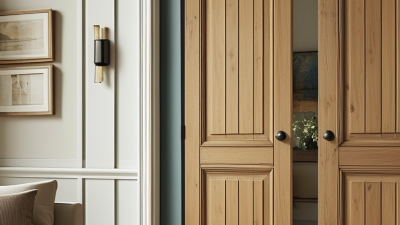
Shaker doors are known for their simple frames, recessed center panels, and adaptable style. Yet choosing a set involves more than matching a cabinet color. The wood, panel construction, finish, and proportions all affect how the doors look and perform in daily use. A sample beside your countertop can reveal undertones that a screen may hide. Small details matter.
This guide shares seven practical tips for comparing shaker doors before you buy. It covers materials, construction, measurements, finishes, hardware, durability, and cost, with attention to what you can check yourself. Look closely at corner joints and panel edges, and confirm the manufacturer’s care instructions and product specifications. For a kitchen exposed to steam and frequent cleaning, those details deserve real weight. For a quieter room, appearance may matter more. There is no single best choice for every home.
Even a well-made door can feel wrong if its proportions clash with nearby drawers or trim. And a low price is not always a saving if the finish disappoints. Measure carefully. Compare samples in your actual lighting, then consider how the doors will be used each day. Some recommendations may still involve trade-offs; that is normal. The goal is not to find a flawless option, but one that suits your space, budget, and expectations.
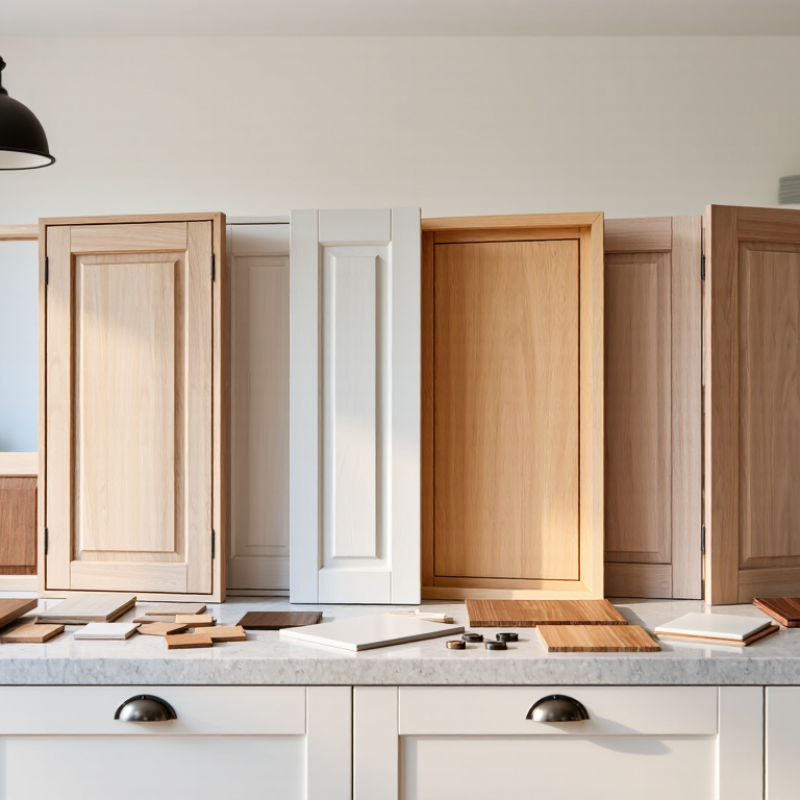
Measure the cabinet opening in three places: top, middle, and bottom. Record the smallest width and height, then check whether the cabinet has a face frame. A ½-inch overlay covers half an inch of the frame around each edge. For one door, that usually means adding 1 inch to the opening’s width and height. For paired doors, allow for the center gap; do not simply split the opening in half. That shortcut can fail.
Check the hinge and frame before ordering. A crooked opening, thick paint, or uneven floor can change the reveal, even when the tape measure looks precise. The Kitchen Cabinet Manufacturers Association’s A161.1 performance standard includes a 25,000-cycle door-hinge test, underscoring how often fit and hardware alignment matter in daily use. The National Kitchen & Bath Association’s planning guidance also stresses door-swing clearance, so confirm that an opened door will not strike a wall, appliance, or neighboring handle. Measure twice. If the opening varies by more than a small fraction of an inch, pause and ask a cabinet professional to verify the overlay and hinge adjustment range. I’ve found that old cabinets rarely stay perfectly square. That detail is easy to miss.
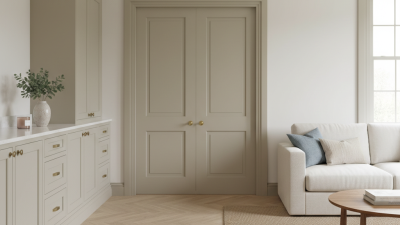
A ¾-inch (19-mm) panel can give a Shaker door a substantial feel, but thickness alone does not tell you how it will perform. Ask whether that measurement refers to the center panel or the entire door. They are not interchangeable. A thicker panel may look more defined in a deep cabinet opening, while a thinner one can suit a lighter, simpler profile. Check a physical sample under your kitchen lighting; edges and shadows often look different in person.
The core material matters just as much. Solid-wood panels offer natural grain and can be refinished, but wood responds to changes in humidity. Seasonal movement may show at the panel edges. MDF is more dimensionally stable and provides a smooth, consistent surface for paint, though damaged edges can be harder to repair and prolonged moisture exposure is a concern. “Solid wood or MDF” can also describe different door components, so confirm what the stiles, rails, and center panel are made from.
Look closely at the panel-to-frame joints and finish, not just a specification sheet. Run a finger along the inside edge; a rough transition may signal uneven sanding. Small detail. I would also ask how the door is sealed on its back and edges, especially near a sink. Specifications help, but they do not replace checking a sample and understanding the room’s humidity.
| Tip | What to check | ¾-inch (19-mm) panel | Solid-wood construction | MDF construction |
|---|---|---|---|---|
| 1. Confirm the panel thickness | Ask whether the stated thickness refers to the center panel, the door slab, or another component. | A ¾-inch panel is 19.05 mm nominally. Verify the actual specification and that it suits the door’s frame and profile. | The panel may be solid wood, but the door can still have a separate frame-and-panel construction. | The panel may be MDF; confirm its thickness separately from the rails and stiles. |
| 2. Identify the material in each part | Request a component-by-component description rather than relying on a broad label such as “wood door.” | Thickness alone does not identify the material or indicate whether the panel is solid wood or MDF. | Check the wood species and whether the rails, stiles, and center panel are all solid wood. | Check whether MDF is used for the center panel, the frame, or the whole door; these are different constructions. |
| 3. Consider humidity and movement | Think about the room’s humidity changes and follow the door maker’s installation and care instructions. | A thicker panel is not automatically more resistant to movement; material and construction also matter. | Wood expands and contracts as moisture conditions change. A properly designed frame-and-panel door allows for this movement. | MDF generally changes less with ordinary humidity fluctuations than solid wood, but it can swell if it gets wet. |
| 4. Match the finish to the material | Decide whether you want a painted surface or a visible natural-wood grain. | A ¾-inch dimension does not determine the finish quality; ask for a sample of the actual door and finish. | Solid wood can show natural grain and variation. The result depends on species, preparation, and finish. | MDF has a uniform, smooth surface that is commonly used for painted finishes. Sealing and edge finishing are important. |
| 5. Check exposure to moisture | For kitchens, bathrooms, and utility areas, check the product’s moisture guidance and keep water from standing on surfaces. | Panel thickness does not make a door waterproof. Protective finish and prompt cleanup still matter. | Solid wood can be affected by moisture and may move; maintain the finish and avoid prolonged wetting. | MDF edges and unsealed areas can absorb water and swell. Do not assume standard MDF is suitable for wet conditions. |
| 6. Verify dimensions and hardware fit | Measure the opening and confirm door width, height, thickness, hinge type, and required clearances before ordering. | Confirm that the ¾-inch measurement is compatible with the planned frame, cabinet, or replacement-door setup. | Weight varies with species, dimensions, and construction. Select hinges and fasteners for the actual door. | Weight and screw-holding performance depend on the complete door construction. Follow the hardware maker’s specifications. |
| 7. Compare care and repair needs | Ask how to clean, touch up, and repair the exact finish and material before making a final choice. | Thickness by itself does not determine how easily a surface can be repaired or refinished. | Depending on the finish and remaining material, solid wood may be sanded or refinished; consult the finish instructions. | MDF is not solid wood and deep damage can be harder to repair invisibly. Avoid aggressive sanding and protect exposed edges. |
Note: Product construction varies. Confirm panel thickness, material composition, finish, and care requirements with the door specification before purchase.
A Shaker door’s frame should feel balanced against its full width, not chosen from a standard sample alone. Houzz’s 2023 U.S. Kitchen Trends Study reported that 64% of homeowners updating kitchen cabinets chose Shaker-style doors. That popularity makes proportion worth checking carefully; the report does not prescribe rail or stile dimensions.
Try a simple scale check. On an 18-inch-wide door, two 2¼-inch stiles take up 25% of the total width. On a 30-inch door, they take up 15%. The same frame can therefore look bold on a narrow door and restrained on a wider one. Compare a full-size drawing or mock-up, including the center panel, before ordering. A small sample can hide how much visual space the frame occupies.
Keep the rails in proportion to the stiles, then check the door’s height and panel shape. A very wide rail may make a short door feel squat. There is no single ratio that suits every cabinet run, and matching every opening perfectly can look a little rigid. Stand back and judge the whole row in its actual lighting. Then adjust.
Kitchen moisture is uneven. A shaker door beside a sink faces splashes and damp hands, while an upper pantry door stays much drier. Choose materials for each door’s location, not just the kitchen as a whole. Solid wood can move as humidity changes, so stable construction and careful fitting matter. Plywood often handles these shifts well, while MDF gives a smooth, consistent surface. However, water that reaches an unsealed MDF edge can cause swelling. Small details count.
Match the finish to the exposure. Near sinks and dishwashers, look for a durable coating intended for kitchen cabinetry, with sealed edges and a protected back as well as a finished front. A glossy surface may wipe clean easily, but sheen alone does not make a door moisture-proof. Check care guidance and clean spills promptly, especially along lower rails and around handles. Good ventilation also helps limit lingering steam. No finish is waterproof forever, and even a well-made door may need touch-ups over time. That part is easy to overlook. Before choosing, compare the door’s core, edge sealing, and finish together; judging the painted face alone can give a misleading impression.
When comparing shaker doors, look beyond the clean frame and flat center panel. Ask whether the cabinet has been tested to KCMA A161.1, a performance standard for kitchen cabinets. Its door evaluation includes 25,000 opening-and-closing cycles. Repeated motion can reveal loose hinges, shifting alignment, or wear that a showroom sample may not show. Ask for test documentation and scope, not just a sales claim. Details matter.
Check whether the reported result applies to the complete cabinet assembly or only a component; test conditions matter. Inspect the door’s edges, joint fit, finish, and hinge adjustment in person. Testing offers useful evidence, but it cannot predict every kitchen’s humidity, cleaning habits, or daily handling. Heavy use changes things. Children may pull on doors, while frequent wiping can wear some finishes. Clear test records help, but consider whether the door’s construction suits your household and maintenance routine.