Why Choose Shaker Style Exterior Doors?
Why Choose Shaker Style Exterior Doors?
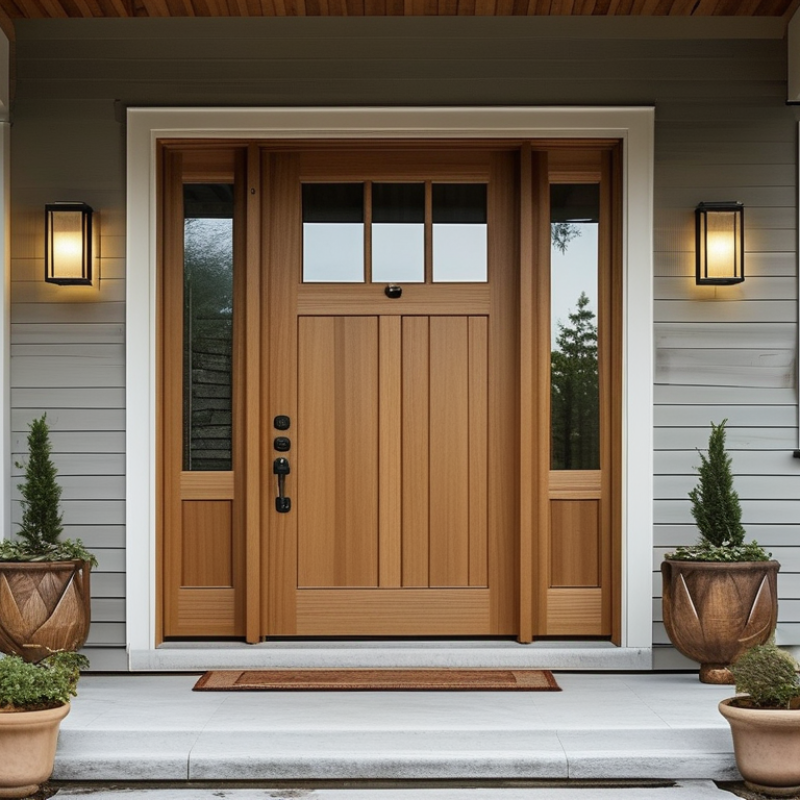
Shaker style exterior doors combine quiet geometry with practical performance. Their recessed panels, square edges, and clean rails create a calm entrance. Picture a four-panel door, warm oak grain, and a matte-black lever beneath a simple porch light. The look feels deliberate, not decorative.
The Freedonia Group’s Doors: United States report identifies repair and remodeling as important demand drivers. NAHB’s 2024 Remodeling Market Survey also highlights continued homeowner investment in existing properties. These findings support a practical question: can one door improve appearance, durability, and daily comfort? A well-built shaker style exterior doors system can help, when its materials and installation match the climate. Fiberglass resists moisture. Engineered wood offers stable detailing. Proper weatherstripping reduces drafts around the frame.
Design historian Jean M. Burks describes Shaker design as “restraint, utility, and craftsmanship.” That principle still matters at the threshold. The door should open smoothly, seal tightly, and withstand repeated seasonal movement. It should also suit the home’s proportions.
Style alone is not performance.
The U.S. Department of Energy advises homeowners to inspect doors, frames, and weather seals when addressing air leakage. That guidance makes the specification process more grounded. Energy ratings, finish quality, hardware strength, and professional fitting deserve equal attention. A beautiful door can still disappoint when the sill admits water or the hinges sag. This is an easy detail to overlook. Choosing correctly requires more than copying a photograph.
What Defines a Shaker Style Exterior Door?
Shaker style exterior doors are defined by restraint. Their faces usually feature a flat center panel, clean rails, and square edges. The design avoids heavy carving and decorative curves. This simplicity gives the entrance a calm, balanced appearance. It also lets the door’s material and finish remain visible.
In practical installations, proportion matters more than decoration. A narrow frame can make the panel look crowded. A wider frame often creates a stronger, more traditional impression. Solid wood may show natural grain, while engineered materials can offer steadier performance in changing weather. Check the panel joints, weatherstripping, hinges, and threshold carefully. These details affect comfort, security, and long-term durability. A Shaker door is simple, not careless.
Tips:
Measure the opening before choosing the door. Consider direct sunlight, rain exposure, and seasonal humidity. Choose a finish suitable for exterior use. Test the swing path with nearby walls, planters, or furniture. Small clearance problems become frustrating later. Also, do not assume every four-panel design feels the same. The panel spacing can change the entire entrance. A sample may look different outdoors. That is worth considering.
How Shaker Doors Combine Simplicity and Visual Balance
Shaker-style exterior doors rely on one disciplined idea: visual balance. Their clean rails, recessed panels, and quiet proportions create a calm entrance without unnecessary decoration. The design feels practical, yet it still gives a home a clear architectural identity.
The National Association of Realtors’ 2023 Remodeling Impact Report measured a 9.7 out of 10 “joy score” for a new steel front door. That figure does not prove that every Shaker door improves a home. It does show that entry doors strongly influence daily satisfaction.
In my experience, balanced panel spacing matters more than dramatic ornament. A narrow frame, deep shadow lines, and a centered handle can make a modest façade feel intentional.
Performance supports the visual argument.
The U.S. Department of Energy reports that air leakage can account for a significant share of household heating and cooling use. A well-fitted door, compression weatherstripping, and a correctly installed threshold help reduce drafts. The details are easy to overlook. They should not be. A beautiful door that rattles in winter is not truly successful.
Shaker doors also work across changing exterior materials, from pale brick to dark fiber cement. Their restraint leaves room for texture, hardware, and natural light.
Still, simplicity can become flatness if the panels lack depth or the finish feels mismatched. That is the part worth reconsidering. The best result is not an empty design, but a carefully measured one.
Key Materials and Construction Features to Consider
Shaker style exterior doors appeal through their clean frames and quiet proportions. Their simple appearance, however, depends on careful material choices. Solid wood offers natural grain and can be repaired after minor damage. It may also expand or shrink with seasonal humidity. That movement deserves attention.
An engineered wood core often provides better dimensional stability than a wide solid panel. A durable exterior veneer can protect the core from moisture. Look for joined rails and stiles, reinforced corners, and secure dowel or mortise-and-tenon connections. These details reduce flexing when the door is opened repeatedly. Weak joints can reveal themselves around the corners.
Weather resistance depends on more than the door slab. A tight perimeter seal blocks drafts and rain. A properly fitted sill should drain water away from the entry. Low-emissivity glass can improve comfort, but glazing must be sealed carefully. Check the hinges, too. Heavy doors need strong, corrosion-resistant hardware and accurate alignment.
Finish all exposed edges, including the bottom edge. Many installations fail there first. I once saw a well-built door swell because that small area was overlooked. Regular inspection still matters. Scratches, loose seals, and soft wood should not be ignored. The best construction is practical, repairable, and suited to the local climate.
Where Shaker Style Exterior Doors Fit Different Home Designs
Why Choose Shaker Style Exterior Doors?
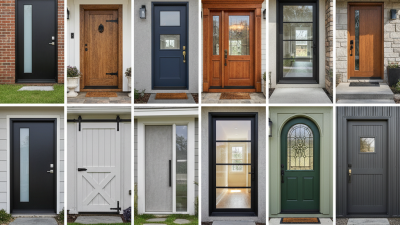
Shaker style exterior doors suit more homes than their simple profile suggests. Their recessed panels work naturally with farmhouse, Colonial, cottage, and Craftsman designs. In transitional homes, a painted door can soften brick, stone, or dark siding. A warm wood finish creates a different effect. It adds texture beside pale stucco or smooth fiber-cement panels.
Proportion matters more than decoration. A narrow entry benefits from one tall Shaker panel and clear glazing. Wider façades can handle double doors or matching sidelights. Black hardware sharpens a modern exterior, while aged metal supports traditional detailing. The 2024 What Home Buyers Really Want report from the National Association of Home Builders identifies energy efficiency as a highly preferred feature. Therefore, select a door with tested insulation, weather seals, and suitable glazing. Appearance alone is not enough.
Resale evidence also supports careful entry upgrades. JLC’s 2024 Cost vs. Value Report placed steel entry-door replacement among the strongest cost-recovery projects. That figure does not guarantee a return for every property. Local climate, installation quality, and neighborhood expectations still matter. I have seen Shaker doors look beautifully calm on one façade, yet strangely plain on another. Deep reveals, balanced trim, and a correctly scaled porch can prevent that problem. Small details count. The style is flexible, but never invisible.
Why Choose Shaker Style Exterior Doors?
Shaker-style exterior doors are defined by clean lines, balanced proportions, and minimal ornamentation. These qualities make them visually compatible with a wide range of home designs.
The comparative compatibility index reflects practical design factors such as simplicity, symmetry, material flexibility, and coordination with common exterior styles. Shaker doors are especially well suited to farmhouse, Colonial, and Craftsman homes, while their restrained profile also complements modern and coastal designs.
How to Choose the Right Shaker Door for Your Entrance
Why Choose Shaker Style Exterior Doors?
Choosing the right Shaker door begins with your entrance, not a design trend. Shaker doors feature clean lines and recessed panels, so they suit traditional and modern homes. Measure the opening carefully, including width, height, jamb depth, and floor clearance. A beautiful door can still feel wrong if it scrapes the threshold or blocks nearby furniture. Check the swing direction before ordering.
Consider your local weather and the entrance’s exposure. Solid wood offers natural warmth, but it needs regular sealing in damp conditions. Engineered wood can provide better dimensional stability, while fiberglass often handles moisture with less maintenance. For a covered porch, several materials may work well. For direct rain, material performance matters more. Dark finishes may also absorb heat in strong sunlight. Review the warranty, finish instructions, weatherstripping, threshold, and hinge quality. Small components affect daily comfort.
Match the panel layout to the home’s proportions. A single large panel can look calm on a narrow entrance, while two or four panels may balance a wider opening. Frosted or textured glass can add daylight without sacrificing much privacy. Choose hardware that is easy to grip, especially during wet or cold weather. Ask a qualified installer to confirm the frame is level and properly sealed. Perfect matching is overrated. I have learned that practical clearance often matters more than a flawless photograph. Test the door’s movement before final installation.