How to Choose the Best Cement Mixer for Your Projects?
Choosing the right Cement Mixer is crucial for any construction or DIY project. The global cement mixer market was valued at approximately $4 billion in 2022. This figure is expected to grow significantly, driven by increased infrastructure demand. Selecting a suitable mixer can impact project efficiency and quality.
A Cement Mixer helps ensure uniform mixing of concrete, impacting strength and durability. According to industry reports, improper mixing can lead to a decrease in concrete quality by up to 30%. This statistic highlights the importance of choosing the right equipment. Factors like capacity, motor power, and portability play a vital role in decision-making.
Using the right Cement Mixer means investing in a tool that meets specific project needs. It is essential to reflect on your project's scale. A small mixer may suffice for minor tasks. However, larger projects may require advanced models. Potential buyers should consider their options carefully. The right choice can enhance productivity while minimizing waste.
Understanding the Different Types of Cement Mixers Available
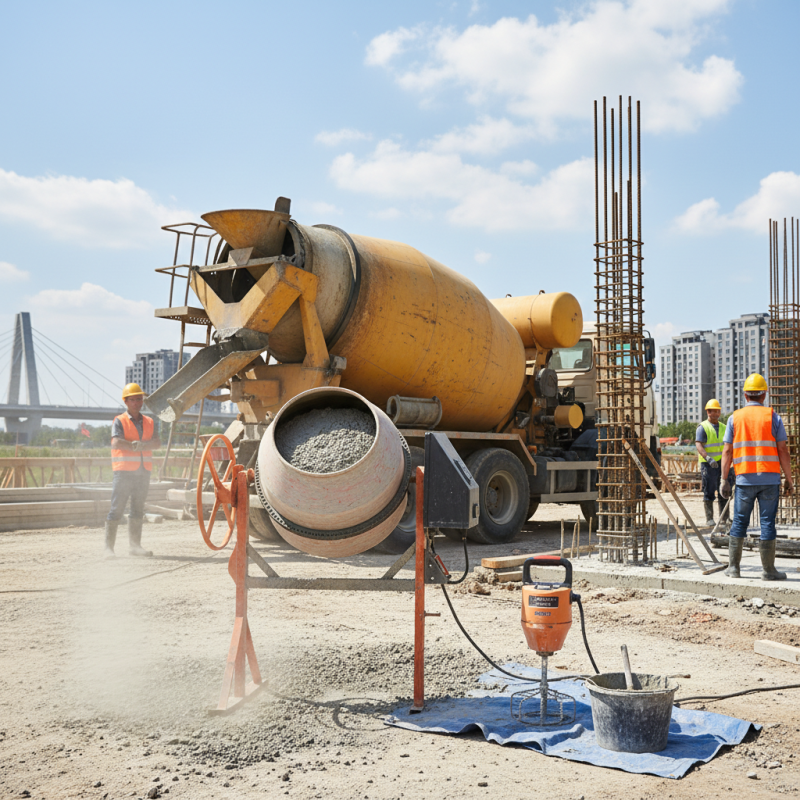
When selecting a cement mixer, understanding the types available is crucial. There are portable mixers, stationary models, and towable options. Each type suits different project needs. Portable mixers are great for small jobs. They are easy to move and store. Stationary mixers are ideal for larger, ongoing projects. They provide a consistent mix but require more space. Towable mixers offer flexibility. They can be towed to a job site and provide larger capacity.
The drum size is another factor to consider. Smaller drums work for DIY projects. Larger drums fit commercial applications better. Pay attention to the mixing capacity and the power source. Electric mixers are quieter and easier to use. Gas-powered models are more robust and suitable for heavy-duty work.
It’s also important to reflect on your needs. Do you mix frequently or just occasionally? A less expensive model might meet your needs if you rarely mix. However, investing in a high-quality mixer can increase efficiency for regular use. Think about where you’ll store the mixer too; adequate space matters. Choosing the right mixer is about balancing your project requirements with budget constraints.
Key Features to Consider When Selecting a Cement Mixer
When selecting a cement mixer, several key features impact your decision. Start with capacity. If you work on large projects, a higher capacity mixer will save time and effort. Smaller projects may benefit from a compact mixer. Look for a model that balances size with project needs.
Power is another crucial aspect. Electric mixers are quieter and easier to use. However, gas-powered models offer more mobility. Examine the motor's horsepower to ensure it meets your workload demands.
Durability and ease of use cannot be overlooked. Check the materials used in construction. Steel components generally last longer than plastic. Also, consider maneuverability. A mixer that’s too heavy can be difficult to transport. Think about how often you’ll move it. Each of these factors plays a role in finding the right cement mixer for your specific requirements.
Evaluating the Mixer Size and Capacity for Your Project Needs
Choosing the right size and capacity for a cement mixer is crucial for your projects. A mixer that’s too small may require multiple batches, wasting time and effort. Conversely, an oversized mixer can lead to unnecessary expenses and handling difficulties. Understanding the scope of your tasks is essential. For smaller projects, like sidewalks or patios, a 3 to 4 cubic feet mixer often suffices. Larger projects, like foundations, may require a mixer with a capacity of 6 cubic feet or more.
Capacity isn't the only factor to consider. Think about the weight of the materials involved. A heavy load can strain smaller mixers, potentially causing damage. Additionally, the space available at your worksite influences your choice. Ensure that you have enough room to operate and transport the mixer. Always reflect on your needs. The right mixer should enhance productivity without overwhelming you. Overestimating your requirements can lead to problems later on.
How to Choose the Best Cement Mixer for Your Projects?
This bar chart illustrates the recommended cement mixer sizes and capacities for various project types. Understanding the right capacity for your specific needs can greatly enhance your project's efficiency.
Assessing Power Source Options: Electric vs. Gas Mixers
When choosing a cement mixer, the power source is crucial. Electric and gas options dominate the market, each having distinct advantages and disadvantages. Electric mixers are generally quieter and require less maintenance. According to industry data, electric mixers tend to have a longer lifespan, averaging about 7-10 years with proper care. They are ideal for small to medium projects, especially in residential areas.
Gas mixers, however, provide more power. They are suitable for larger projects and remote locations lacking power supply. Reports indicate that gas mixers can produce twice the mixing capacity of electric ones. But with great power comes a need for careful handling. Gas mixers can be loud and emit fumes, which can pose health risks.
Tip: When selecting a cement mixer, evaluate the scale of your project. Consider electric mixers for smaller tasks where quietness matters. For large jobs, a gas mixer might be more practical.
It's also essential to reflect on the cost implications. Electric mixers may seem less expensive upfront, but gas mixers often speed up the project timeline. Therefore, understanding your project's specific needs can guide you to the best choice. Aim for efficiency, but always weigh the long-term benefits against initial costs.
Budgeting for Your Cement Mixer: Costs and Value Considerations
When budgeting for a cement mixer, one must consider both initial costs and long-term value. Cement mixers vary widely in price, from simple portable models to larger, more complex machines. Calculating your total budget helps identify the mixer that meets both your project needs and your financial constraints. A higher price doesn't always guarantee better quality. Sometimes, a mid-range mixer can offer sufficient durability without breaking the bank.
Value is also found in features. Look for mixers with reliable motors and good drum capacity. While they may cost a little more upfront, these features can save you time and effort later. However, think about the frequency of use. If you rarely mix concrete, investing in a high-end mixer might not make sense. Balancing features against cost can be challenging. Every project is unique, and what works for one might not work for another.
Reflect on how you plan to use the mixer. Are you doing larger renovations or small indoor projects? Each scenario requires different capabilities. Think about your skills as well. A complex mixer may intimidate a beginner. Careful thought is essential when making a decision. It’s important to weigh your priorities: budget, utility, and ease of use.