Why Choose Fiberboard Medium Density Board for Your Projects?
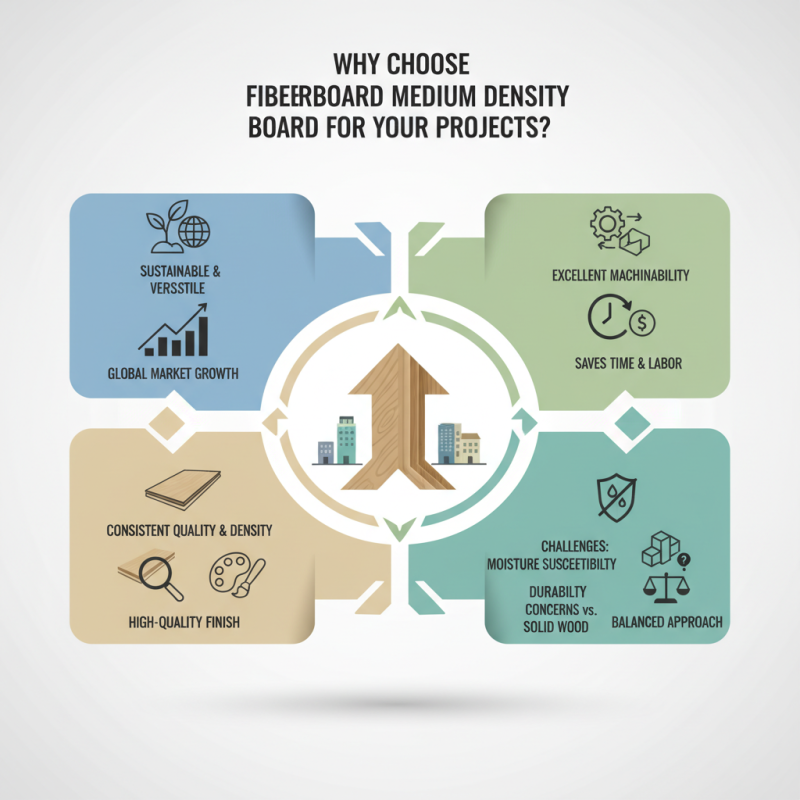
In recent years, the building materials industry has seen a significant shift towards sustainable and versatile products. Fiberboard Medium Density Board (MDF) has emerged as a popular choice among architects and builders. In fact, market research indicates that the global MDF market is expected to grow at a compound annual growth rate (CAGR) of 5.3% from 2021 to 2028. This trend highlights the increasing preference for MDF in both residential and commercial projects.
One of the standout features of Fiberboard Medium Density Board is its excellent machinability. It can be easily cut, shaped, and finished to meet various design needs. This flexibility saves time and labor costs, making it a cost-effective choice for many applications. According to industry experts, projects that utilize MDF have reported a 30% reduction in overall production time. Despite these advantages, there are challenges, such as the board's susceptibility to moisture damage if not properly sealed.
The consistent quality and density of Fiberboard Medium Density Board allow for a high-quality finish that appeals to consumers. However, some concerns remain about long-term durability compared to solid wood. A balanced approach in design and application can address these issues, ensuring that MDF continues to be a reliable option for modern construction. Through careful consideration, professionals can leverage the benefits of Fiberboard Medium Density Board while mitigating its limitations.
Understanding Fiberboard Medium Density Board: Definition and Composition
Fiberboard medium density board (MDF) is a highly versatile material used in various construction and DIY projects. Its composition comprises wood fibers, wax, and resin that undergo intense heat and pressure. This process binds the fibers together, creating a dense board with a smooth surface. This unique structure makes it ideal for applications such as cabinetry, furniture, and decorative Moldings.
MDF offers several advantages over traditional solid wood. It is less expensive and available in large sheets, allowing for efficient use of materials. Its ability to be shaped and painted easily gives designers extensive creative freedom. However, some users may find that MDF is not as strong as solid wood. It can be susceptible to moisture damage if not properly sealed. Choosing the right application is crucial to avoid potential issues. Understanding these aspects helps in making informed decisions for your projects.
Fiberboard Medium Density Board: Benefits and Applications
Key Advantages of Using Fiberboard Medium Density Board in Projects
Fiberboard Medium Density Board (MDF) stands out as an excellent choice for various projects. One of its key advantages is its smooth surface. This allows for easy painting and veneering. Many woodworkers appreciate how well MDF holds finishes. The dense fibers make it less prone to warping compared to solid wood. This stability is particularly useful in humid conditions.
Another advantage is its versatility. MDF can be easily cut into intricate shapes. This makes it ideal for customized furniture and decorative elements. Its uniform thickness simplifies the manufacturing process. Projects can often be completed more quickly. However, it’s worth noting that MDF can be heavy, which might pose challenges during installation.
Lastly, it is cost-effective. Fiberboard Medium Density Board provides a reliable material option at a lower price point. For budget-conscious projects, it can deliver impressive results without sacrificing quality. While it lacks the natural grain of wood, it opens doors for creative designs. Yet, some may need to manage expectations regarding its durability under heavy load. These factors reveal the multifaceted nature of MDF and its place in woodworking today.
Comparative Analysis: Fiberboard Medium Density Board vs. Other Materials
Fiberboard Medium Density Board (MDF) often stands out in the world of materials. It offers unique benefits compared to plywood and particleboard. MDF is denser and smoother, making it ideal for projects requiring precision. Unlike solid wood, it doesn't warp or crack easily. This stability provides a reliable surface for various applications, from cabinetry to intricate moldings.
However, while MDF excels in many areas, it has its downsides. Its susceptibility to moisture can be a concern in humid environments. Furthermore, cutting MDF can produce harmful dust, so proper ventilation and protective gear are essential. Keeping these factors in mind will improve your crafting experience.
Tips: When using MDF, consider applying a moisture-resistant sealant, especially for kitchen and bathroom projects. Also, investing in a high-quality saw blade can minimize dust and enhance your cuts. Take breaks when sanding to avoid inhaling particles—your lungs will thank you!
Common Applications of Fiberboard Medium Density Board in Various Industries
Fiberboard medium density board (MDF) is a versatile material used across various industries. Its smooth surface and uniform density make it ideal for furniture, cabinetry, and decorative applications. In the construction industry, MDF is often chosen for partition walls and ceiling panels. Its acoustic properties help reduce noise, enhancing comfort in homes and offices.
In the woodworking sector, artisans appreciate its ease of cutting and shaping. MDF allows for intricate designs that can elevate any project. Moreover, it provides a stable base for veneers and paints. However, its susceptibility to moisture makes it less suitable for outdoor use. Careful selection and treatment can mitigate this issue.
Tips: When working with MDF, always wear a mask. Dust from cutting can harm your lungs. Additionally, consider using a fine blade to minimize edges' roughness. It’s essential to plan your cuts. Miscalculations can lead to waste, affecting project budgets. These small steps can significantly enhance your experience with this material.
Tips for Selecting and Working with Fiberboard Medium Density Board
When selecting Fiberboard Medium Density Board (MDF), consider its versatility. MDF is ideal for furniture, cabinetry, and decorative projects. According to industry reports, MDF comprises around 30% of the wood panel market. This widespread use reflects its durability and smooth finish.
Look for MDF that meets industry standards. For instance, boards should comply with the American National Standards Institute (ANSI) guidelines. Proper compliance ensures strength and reliability. Check for certifications that prove quality. It’s important to note that not all boards are created equal. Some might emit more VOCs than others, impacting indoor air quality. Choose low-emission options whenever possible.
When working with MDF, dust management is crucial. The fine particles can be harmful if inhaled. Always wear a mask and ensure good ventilation. Additionally, cutting and shaping MDF can lead to chipping. Utilize proper tools and techniques to minimize this issue. Consider sealing edges to prevent moisture absorption, which can cause warping. Mistakes can happen, but that’s part of the learning process. Pay attention to the installation methods, improving your skills along the way.
Why Choose Fiberboard Medium Density Board for Your Projects?
| Property | Description | Usage Tips |
| Density | Typically between 600-800 kg/m³. | Select density based on load-bearing requirements. |
| Surface Finish | Often available in a smooth, prefinished variety. | Choose a finish that suits your aesthetic needs. |
| Workability | Easy to cut, saw, and shape. | Use sharp tools for best results and to avoid splintering. |
| Moisture Resistance | Generally less resistant than plywood. | Use in low-moisture areas or add water-resistant coatings. |
| Applications | Common in furniture, cabinetry, and flooring. | Consider intended use and durability requirements. |