China Top 10 Dog Treats Manufacturers for Global Buyers?
China has become a major sourcing destination for Dog Treats, offering broad production capacity, competitive pricing, and flexible private-label services. Global buyers can find manufacturers producing jerky, dental chews, biscuits, freeze-dried snacks, and functional treats. However, a polished catalog does not guarantee dependable quality. Careful verification still matters.
This guide introduces ten China-based Dog Treats manufacturers worth evaluating for international cooperation. The selection considers product experience, ingredient transparency, factory capabilities, export support, packaging options, and quality-control procedures. Buyers should review certificates, laboratory reports, allergen controls, and batch traceability before placing an order. Factory audits can reveal practical details, such as clean drying rooms, sealed ingredient storage, and documented temperature records.
Not every supplier fits every market.
Some manufacturers excel at OEM development, while others focus on stable high-volume production. A smaller factory may offer closer communication but limited capacity. A large producer may provide stronger systems but less flexibility. That trade-off deserves attention. Minimum order quantities, lead times, sample approval, and shipping arrangements should be confirmed in writing. Product claims also need careful review, especially for treats positioned as natural, grain-free, or functional.
The shortlist is a useful starting point, not a final decision. Buyer experience, independent testing, and direct factory communication remain essential. Conditions can change, and online information may become outdated. A reliable sourcing process combines professional judgment with healthy skepticism. That approach helps global buyers build safer, clearer, and more sustainable Dog Treats partnerships in China.
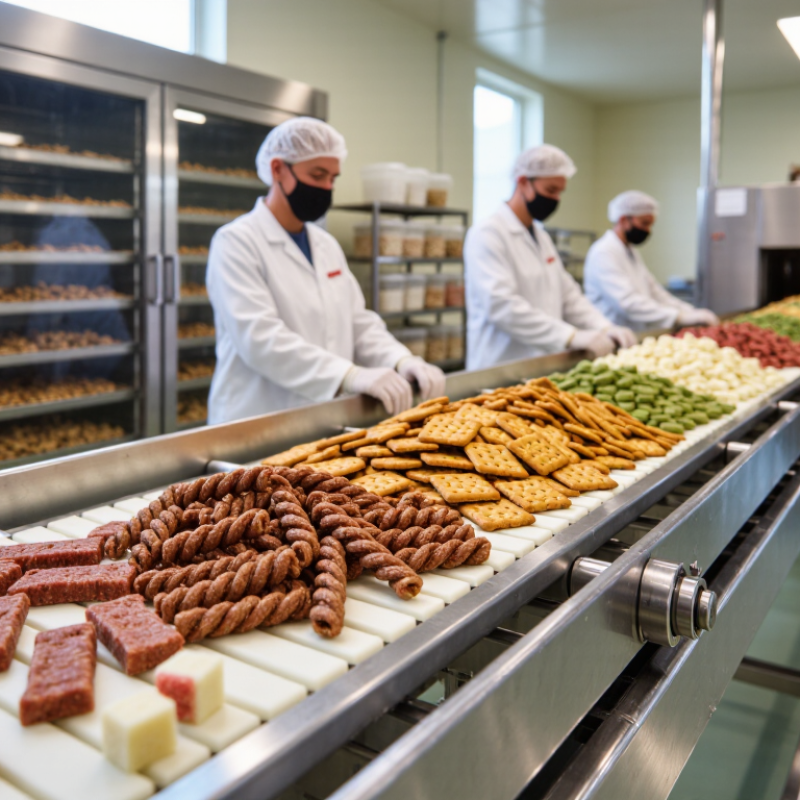
How China’s Dog Treat Manufacturing Industry Serves Global Buyers
China Top 10 Dog Treats Manufacturers for Global Buyers
China’s dog treat manufacturing industry serves global buyers through flexible production, export experience, and increasingly formal quality systems. FEDIAF’s 2024 Facts & Figures report recorded about 299 million pet-owning households in Europe, with pet food sales reaching approximately €29.3 billion in 2023. This demand encourages Chinese factories to produce soft chews, freeze-dried snacks, dental products, and ingredient-limited formulas for different markets.
Many export-oriented manufacturers now use HACCP plans, batch coding, metal detection, and laboratory testing for moisture, microbiological safety, and allergens. Buyers should request recent test reports, ingredient specifications, origin records, and recall procedures. A factory visit can reveal practical details: clean-zone separation, sealed packaging rooms, and workers checking trays before drying. Consistency matters. However, certificates alone are not enough. Some documentation may be outdated, incomplete, or poorly matched to the shipment.
The American Pet Products Association reported US pet industry spending of $147 billion in 2023, showing the commercial scale behind premium pet treats. Chinese suppliers support this market with lower minimum order quantities, packaging customization, and trial production. Yet low pricing can hide longer lead times, unstable raw materials, or weak communication. Global buyers should compare three production batches, not one sample. They should also confirm destination-country requirements before ordering. The process is efficient when technical files, packaging details, inspection standards, and payment terms are agreed in writing. Mistakes still happen. Careful verification remains essential.
Criteria for Ranking China’s Top 10 Dog Treat Manufacturers
For a China Top 10 list, ranking should begin with verified manufacturing strength, not online visibility. The American Pet Products Association reported U.S. pet industry spending of about $150.6 billion in 2024. That scale raises buyer expectations for safety, consistency, and supply reliability.
A credible ranking should review food-safety systems, laboratory testing, ingredient traceability, and production audits. ISO 22000, HACCP, and GMP procedures matter, but certificates alone are not enough. Auditors should inspect cleaning records, allergen controls, storage conditions, and batch-release data. The FEDIAF 2024 report recorded 299 million pets in Europe and nearly €30 billion in pet food sales in 2023. Manufacturers serving this market need documented export experience and clear technical files. Small details matter. Can the supplier provide a retained sample? Can it explain a delayed shipment?
Capacity should be measured through equipment, staffing, lead times, and backup production plans. Ranking should also assess product development, packaging accuracy, minimum order quantities, and response speed. Independent testing for nutrition, microbiological safety, and contaminants adds stronger evidence. Pricing belongs in the review, but it should not dominate it. The cheapest quotation may conceal weaker controls or unstable raw materials. Sustainability claims need proof, such as energy records or recyclable packaging data. I would also score communication transparency, because even experienced buyers sometimes overlook it. No ranking is perfect; audit conditions can change, and reported capacity may differ from real monthly output.
Criteria for Ranking China’s Top 10 Dog Treat Manufacturers
This buyer-oriented scoring framework uses a 100-point weighting model for comparing Chinese dog treat manufacturers. Food safety and export compliance receive the highest weight because they directly affect regulatory approval, product risk, and market access. Quality consistency, production capability, customization, and logistics represent the remaining procurement priorities. The framework is intended for supplier evaluation and does not disclose individual company or brand performance data.
Product Quality, Safety Standards, and Export Certifications
China Top 10 Dog Treats Manufacturers for Global Buyers?
For global buyers, the top ten manufacturers should be judged beyond price and production capacity. Product quality begins with controlled ingredients, stable recipes, and documented batch testing. FEDIAF’s 2024 facts report recorded about 139 million pet-owning households in Europe, showing the scale of this market. That scale also increases buyer responsibility. A supplier should provide ingredient specifications, allergen controls, microbiological results, and a clear lot-traceability process. Small details matter.
Safety standards must match the destination market. ISO 22000, HACCP, BRCGS, or IFS certification can support supplier evaluation, but certificates alone are not proof. Buyers should verify certificate numbers, audit dates, factory addresses, and product scope. Export documents may include certificates of analysis, health certificates, certificates of origin, and customs paperwork. Requirements differ between the European Union, the United States, and other markets. I would request recent test reports, not only company templates. One weakness remains common: some documents describe the factory, but not the exact treat being shipped.
Tips: Ask for three production batches. Compare moisture, protein, fat, and microbial results. Check packaging seals and storage conditions through video or an on-site audit. Confirm that the export certificate matches the destination country. Also review complaint records. A manufacturer unwilling to share corrective-action details deserves careful reconsideration.