Choosing the best door hinges in 2026 is less about picking the shiniest finish and more about matching hardware to the door. A solid wood entry door, a lightweight interior door, and a frequently used commercial door place different demands on their hinges. Get the match wrong, and the door may sag, squeak, or scrape the floor. Small part. Big consequences.
Door-hardware consultant Lori Greene is known for practical guidance on door function and hardware. Her advice can be summarized this way: “Choose a hinge for the door’s weight, use, and installation—not appearance alone.” This is a paraphrase, not a verified direct quotation. That distinction matters when buyers compare recommendations. For this guide, we’ll look at common hinge types, materials, finishes, bearing designs, and the details that affect fit. A stainless-steel hinge may suit a damp location better than a decorative brass option, while a ball-bearing model can be worth considering for a heavy door used throughout the day. Still, no single hinge is best for every opening. Check the door’s weight, thickness, frame, and existing hinge dimensions before ordering. Measure twice. It is easy to overlook screw length or corner shape, and those details can turn a promising purchase into a return. The following sections will help buyers weigh durability, appearance, installation needs, and value when choosing door hinges in 2026.
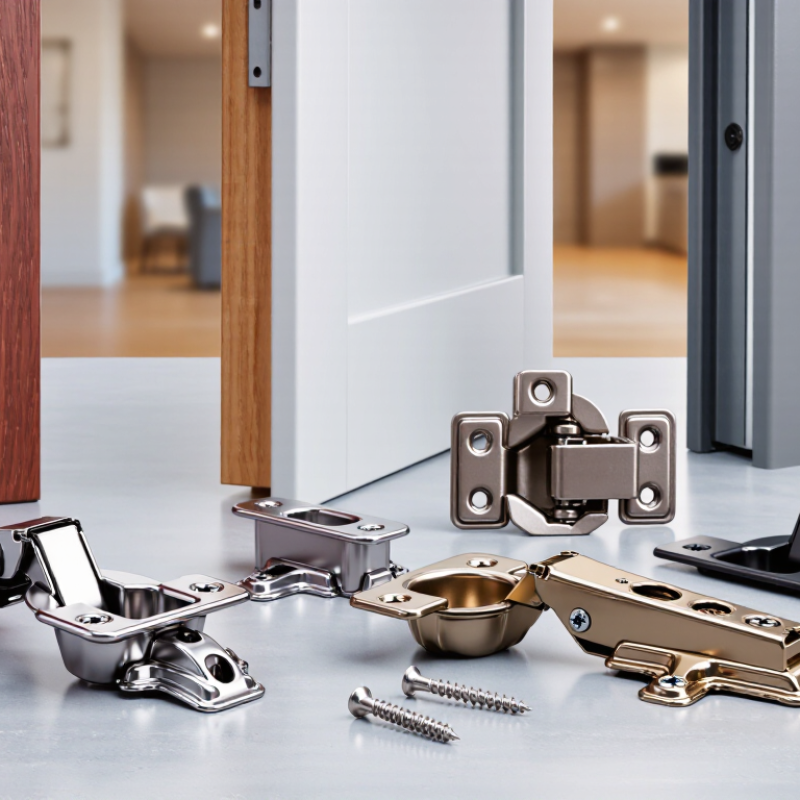
A door hinge is a small pivot that carries the door’s weight while letting it swing. Its leaves attach to the door and frame; a pin joins them and forms the turning axis. When hinges line up, the load is shared more evenly. A loose screw can make the door sag, scrape the floor, or refuse to latch. Small parts matter.
Butt hinges suit many interior and exterior doors, while ball-bearing models can reduce friction on frequently used or heavier doors. Spring hinges help a door close by itself, but they need correct adjustment. Continuous hinges run along much of the door’s edge and spread the load over a longer area. More hardware is not always better. Door weight, frequency of use, and frame strength all affect the choice.
Check the hinge size, thickness, material, and stated load capacity against the door’s actual weight. In damp locations, corrosion-resistant materials can help; the right choice still depends on exposure and maintenance. Measure the frame and door, then check screw length and clearance before installation. I would not choose by finish alone: a polished hinge cannot compensate for weak framing or misaligned leaves. Even careful measurements can miss an uneven frame, so check the door’s swing after fitting.

How Door Hinges Work and What Buyers Should Know
A common rule of thumb is to use two hinges for doors up to 60 inches tall, three for doors 61–90 inches tall, and four for doors 91–120 inches tall. Actual requirements depend on door weight, hinge design, and installation guidance. Butt hinges suit many standard doors; consider continuous or pivot hinges for applications that need different support. Always check the door and hinge manufacturer’s specifications.
Butt hinges suit most interior doors. They are simple, easy to adjust, and available in removable-pin versions for doors that need occasional lifting. For heavy entry doors, ball-bearing hinges reduce friction during frequent opening. A solid door should not rely on a light-duty hinge. Check the door’s weight and the hinge maker’s rated capacity before choosing.
Spring hinges can close a door automatically, which helps in busy kitchens or utility rooms. They need careful tension adjustment; too much force can make the door slam. Pivot hinges carry weight at the top and bottom, creating a clean look for some tall or wide doors. Concealed hinges hide when the door is shut, but fitting them often requires precise routing. Small errors show.
Continuous hinges run nearly the full door height. They spread load along the frame and can help with doors that see heavy use. Grand View Research’s 2023 door-hinges market analysis estimated the global market at about US$5.6 billion. That figure describes market scale, not a ranking of hinge performance. For real projects, confirm material, corrosion resistance, screw length, and tested load ratings; the right type still depends on the frame and installation.
For buyers choosing door hinges in 2026, material and finish affect more than appearance. They influence corrosion resistance, wear, and how reliably a hinge moves under repeated use. Steel hinges can support substantial everyday use, but ordinary steel may rust in damp rooms or near exterior doors. Stainless steel is often a practical choice for humid conditions. Brass resists corrosion, though the hinge still needs to suit the door’s weight. That matters.
The finish adds another layer of protection, but it cannot fix weak construction or poor installation. A plated finish can wear through at the pin and knuckles, especially on a busy door. Painted finishes offer color, yet scratches may expose the metal below. A living finish may change tone over time; some buyers like that, others do not. I would not judge durability by shine alone. Look closely at the hinge edges and moving joints.
Match the hinge to its setting. A bathroom door faces moisture and cleaning products, while a bedroom door usually encounters less stress. Check the manufacturer’s stated load capacity and the door’s weight, then use screws suited to the frame. Open and close the door during inspection: movement should feel smooth, without scraping or a loose pin. One detail is easy to overlook. Even a durable hinge can fail early if it is misaligned or poorly fitted. A little uncertainty remains, since finish life depends on use, cleaning, and the local environment.
| Hinge Material | Common Finish Options | Corrosion Performance | Strength and Wear Considerations | Good Fit For | Key Trade-Offs |
|---|---|---|---|---|---|
| 304 stainless steel | Brushed or polished; passivated; some coated finishes | Good resistance to rust in typical indoor and many outdoor environments. Chlorides and coastal exposure can cause staining or pitting. | Strong and durable for many residential and commercial doors. Actual load capacity depends on hinge size, construction, pin, door weight, and fasteners. | Exterior doors, kitchens, utility areas, and general-purpose applications where low maintenance matters. | Usually costs more than basic carbon steel. Not the best choice for persistent salt exposure. |
| 316 stainless steel | Brushed, polished, or passivated | Very good resistance in marine and chloride-rich environments compared with 304 stainless steel. | Offers durable service, but hinge design and installation still determine how much door weight it can support. | Coastal properties, docks, pool areas, and other locations exposed to salt or frequent moisture. | Typically more expensive than 304 stainless steel; surface deposits should still be cleaned periodically. |
| Carbon steel | Zinc plating, painted coating, or powder coating | Uncoated steel rusts readily when exposed to moisture. Protection depends on the coating remaining intact, especially at edges and cut surfaces. | Can provide high strength and good value when correctly sized and protected. Scratches or worn coating can expose the steel beneath. | Interior doors and sheltered locations; suitable where cost and a broad choice of finishes are priorities. | Not ideal for wet or coastal environments unless the product is specifically rated for those conditions and maintained. |
| Solid brass | Polished, satin, lacquered, or living/patinated finish | Does not rust like iron-based steel, but can tarnish or change color. Lacquer can slow tarnishing until it wears or is damaged. | Useful for many interior doors. Compare the hinge’s construction and load rating; appearance alone does not indicate strength. | Interior residential doors, decorative hardware, and projects where a warm metallic appearance is desired. | Can be softer than steel in some designs and may cost more. Lacquered finishes can require refinishing if damaged. |
| Bronze | Oil-rubbed, brushed, polished, or natural patina | Generally resists corrosion well and may develop a patina over time, depending on the alloy and exposure. | Durability varies by alloy and hinge construction. Check the manufacturer’s stated load and use information for the specific product. | Traditional or architectural projects and locations where a naturally aged appearance is acceptable. | Color and patina can change with handling and weather. Often selected for appearance rather than lowest initial cost. |
| Zinc-alloy die-cast | Decorative plating, painted finish, or powder coating | Performance depends strongly on the coating and exposure. Damage to the finish can lead to deterioration of the underlying alloy. | Often used for decorative or lighter-duty hardware. Do not assume it is suitable for heavy doors without a stated rating. | Light interior doors and applications where decorative shapes or a coordinated finish are important. | Generally a less suitable choice for heavy, high-cycle, or harsh outdoor applications than appropriately specified steel or stainless steel. |
| Coated or plated steel hinge | Electroplated, painted, or powder-coated surface | A continuous, undamaged coating limits moisture contact. Resistance falls if the coating is chipped, scratched, or worn through. | The steel substrate can be strong; the hinge’s rating and coating quality matter more than the finish label alone. | Budget-conscious interior use and sheltered installations where the finish matches nearby hardware. | Inspect high-wear edges and hinge knuckles. Avoid treating a decorative coating as equivalent to corrosion-resistant stainless steel. |
| Stainless steel with PVD finish | Physical vapor deposition in decorative colors over a suitable base metal | The base stainless grade provides the underlying corrosion resistance; the PVD layer adds color and surface properties but does not make every base metal suitable for every environment. | Can offer a durable decorative surface when properly applied. Abrasive cleaning may damage the appearance. | Projects needing a colored metallic appearance with a stainless-steel base. | Confirm the base alloy and care instructions. Finish durability varies with product quality and use conditions. |
The best hinge in 2026 depends on door weight, traffic, and exposure—not appearance alone. For a frequently used entrance, check the hinge’s tested load capacity and cycle rating. ANSI/BHMA A156.1-2021 classifies hinges by performance; its cycle benchmarks are 2.5 million for Grade 1, 1.5 million for Grade 2, and 350,000 for Grade 3. That is useful evidence. It is not a guarantee of service life: installation, door alignment, and maintenance also affect wear.
Compare materials and construction against the actual setting. Stainless steel resists corrosion in damp or coastal air, while plated steel may suit protected interior doors at lower cost. Look for bearings or washers when a heavy door opens repeatedly, and confirm hinge dimensions, screw placement, and leaf thickness match the frame. A mismatch can cause sagging.
Check whether the load rating assumes a particular number of hinges; ratings are not always directly comparable. For fire doors, choose hardware listed for the complete door assembly, not a hinge selected by appearance. Small details matter.
A smooth swing in a showroom tells little about years of daily use, so request test documentation and inspect the installation instructions before purchase. The paperwork can be tedious, but skipping it is an easy mistake.
Choosing the right hinge starts with the door, not its finish. A lightweight closet door may work well with standard butt hinges, while a solid wood entry door needs hinges rated for its weight and frequent use. Check the door’s height, thickness, and swing direction before buying. Small details matter. A hinge that fits the door but clashes with the frame can bind or leave uneven gaps.
The setting changes the choice. In a bathroom or near an exterior entrance, moisture can cause some metals to stain or corrode, so look for a suitable corrosion-resistant finish. For a quiet bedroom, ball-bearing hinges may reduce friction and squeaking, though correct installation still matters. Measure the existing hinge leaf and screw spacing if you are replacing hardware; holes rarely line up perfectly by accident. Measure twice.
Also consider the frame and how the door will be used. A heavy door may need more hinges, but follow the door or hinge maker’s guidance rather than guessing. Longer screws can help secure a hinge to a sound frame, but they are not a fix for damaged wood. It is easy to focus on appearance and overlook alignment. I would check the door’s clearance and test its movement before choosing a decorative style. A little extra measuring can save a frustrating adjustment later.